Global Sourcing
How to Choose the Right Global Sourcing & Manufacturing Partner
Practical guidance for evaluating manufacturing capabilities, quality standards, logistics coordination, warehousing and end-to-end supply chain support.
Introduction
Choosing a global sourcing and manufacturing partner can affect product quality, delivery schedules, margins and customer trust. Overseas production may provide access to specialised expertise and suitable manufacturing markets. Still, it also creates risks: a factory may lack the capacity it claims, specifications may be misunderstood, or a low quotation may exclude important costs.
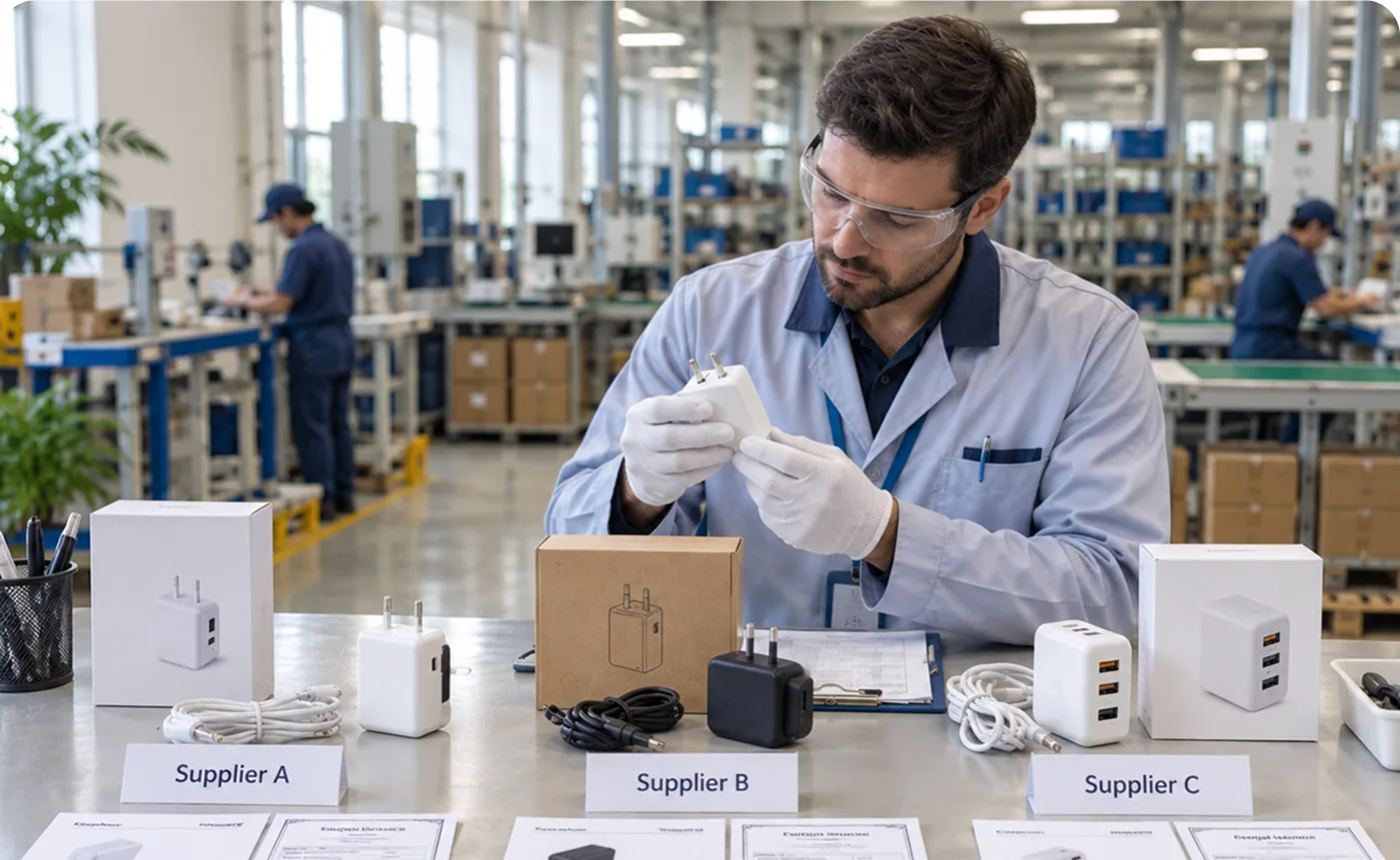
A sample alone cannot confirm that a supplier can reproduce the product consistently at commercial scale. Nor does company registration establish factory capability, quality discipline or reliable communication. Buyers need evidence of how products will be made, checked, shipped and supported when something goes wrong.
A structured evaluation helps businesses compare partners on capability and accountability, not price alone.
What Makes a Global Supply Chain Partner the Right Fit?
A suitable partner should understand your product requirements, commercial priorities and long-term business objectives. The required level of support depends on product complexity, order volumes, destination markets, and operational requirements.
Key considerations include:
- Manufacturing capability
- Quality and compliance
- Logistics coordination
- Warehousing and inventory management
- Supply chain visibility
- Business continuity
- Operational expertise
These factors are interconnected. A manufacturing delay can affect freight bookings, inventory availability and customer deliveries. Evaluating these relationships helps businesses choose a partner that fits their broader operating requirements.
8 Factors to Evaluate Before Selecting a Partner
1. Define Your Product and Business Requirements
Prepare a clear brief before requesting quotations. Incomplete specifications often lead to inconsistent proposals, inaccurate pricing, and disagreements after production begins.
Your requirement document should include:
- Product specifications, materials, dimensions and technical drawings
- Expected order quantities and anticipated future demand
- Quality standards, testing procedures and acceptance criteria
- Packaging, labelling and destination-market requirements
- Production and delivery timelines
- Budget, payment terms and commercial expectations
- Applicable compliance and documentation requirements
Separate essential requirements from areas where alternatives are acceptable. A different material may work if it meets performance standards; a safety-critical specification may be non-negotiable.
2. Assess Manufacturing Capability and Scalability
A successful product sample does not prove that a manufacturer can consistently deliver commercial quantities. Assess its facilities, equipment, workforce, manufacturing processes and experience with comparable products.
Ask potential partners:
- Can the manufacturer meet your specifications consistently?
- What production capacity is available after existing commitments?
- What are the normal manufacturing lead times?
- Are critical processes subcontracted?
- How do they manage material shortages and production interruptions?
- Can production scale as demand increases?
Where appropriate, a factory audit, production assessment or documented capability review can help verify these claims. Choosing a partner with verified capacity reduces the risk of delays as order volumes increase.
3. Agree on Quality and Inspection Responsibilities
Define quality before production, not after defects appear. Establish how you check incoming materials, monitor production, and isolate and correct non-conforming products.
Depending on the product, verification may include factory audits, product testing, in-process inspections, pre-shipment inspections and compliance documentation. Set acceptance criteria, sampling requirements, inspection stages and reporting expectations in writing.
Clarify who approves the specifications, arranges inspections, reviews results and authorises corrective action. Also agree what happens if goods fail inspection: whether the supplier must rework or replace them, who pays associated costs, and how a reinspection is arranged. Clear accountability is especially important when the factory, sourcing partner and inspection provider are separate organisations.
4. Compare the Total Cost of Supplying the Product
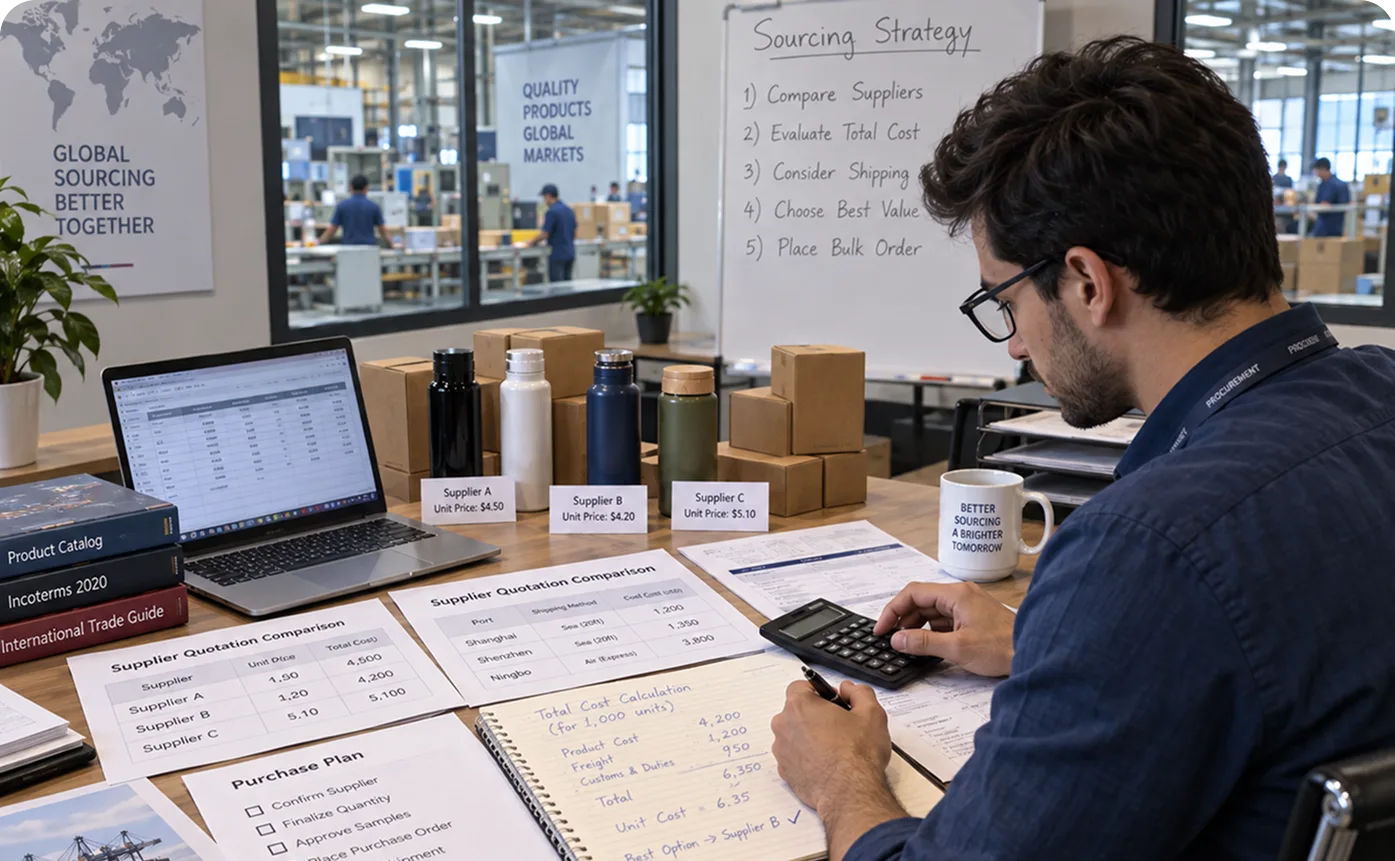
The lowest manufacturing quotation does not necessarily provide the best commercial outcome. Businesses should compare the total cost of supplying the product, including expenses that arise before and after manufacturing.
| Cost area | What to examine |
|---|---|
| Production | Unit price, tooling, minimum order quantities and production changes |
| Quality | Testing, inspections, rework and replacement arrangements |
| International logistics | Freight, insurance, duties and customs-related charges |
| Warehousing | Storage, handling, fulfillment and distribution |
| Working capital | Payment schedules, lead times and inventory commitments |
| Operational risk | Potential costs associated with delays, defects and disruptions |
Compare quotations using identical specifications, quantities, delivery terms and quality requirements. Ask suppliers to identify exclusions, assumptions and charges that may change with order volume or material prices.
For example, a lower unit price may require a much larger minimum order. If demand is uncertain, excess inventory can occupy warehouse space and tie up working capital. A slightly higher unit price with smaller order quantities, clearer quality obligations or more reliable delivery may produce a better overall result.
5. Evaluate Logistics and Delivery Coordination
Production completion needs to align with freight availability, export documents, customs requirements and destination delivery schedules.
Clarify who coordinates transportation, prepares shipping documents, monitors shipments and communicates delays. Air, sea and road freight involve different trade-offs in cost, transit time and flexibility. Consider logistics during partner selection, rather than treating it as a separate task after production. Ask how the parties will manage missed dispatch dates, incomplete documentation and unexpected transit delays.
6. Consider Warehousing, Inventory and Visibility
Determine how products will be stored, tracked and distributed after manufacturing. Warehousing decisions affect replenishment speed, inventory costs and customer service. Inventory plans should reflect demand and replenishment lead times: insufficient stock can interrupt sales, while excess inventory increases carrying costs.
Agree on what operational information will be shared, including production milestones, inspection results, shipment progress and delivery exceptions. Supply Chain Visibility & Control should be understood in line with the support actually required.
Where the scope is advisory, its role is to help assess reporting needs, identify coordination gaps and support exception-management decisions—not to imply that every arrangement includes a fully integrated technology platform or continuous live tracking.
7. Assess Commercial Accountability and Risk Management
Review payment schedules, production commitments, ownership of designs and tooling, confidentiality provisions and procedures for specification changes. Confirm which legal entity signs the agreement and which party accepts responsibility for delivery and quality obligations. Do not assume that a partner coordinating an order automatically assumes every manufacturer's contractual responsibility.
Ask how material shortages, subcontractor delays and demand changes are handled. Depending on product criticality, contingency planning may include alternative suppliers, recovery procedures or adjusted inventory policies.
Warning signs that need investigation include:
- Unclear information about factory locations or subcontractors.
- Repeated quotation changes without adequate explanation.
- Little evidence of quality controls or inconsistent inspection records.
- Unclear responsibility for shipping documents and delivery commitments.
- Poor communication when problems arise.
- Commercial terms that do not match the proposed arrangement.
These signs do not automatically disqualify a candidate, but you should clarify unresolved concerns before any significant commitment. Request evidence, document the answer and assess whether the risk can be managed.
8. Validate the Partnership Through a Pilot Order
Where commercially practical, begin with approved samples, a pilot order or a phased engagement. A controlled evaluation shows how the partner performs against actual requirements before you make larger financial commitments.
Set measurable criteria in advance. These may include conformance to specifications, defect rates, production lead time, documentation accuracy, responsiveness and delivery performance. Use the same criteria agreed during supplier selection, rather than changing expectations after results arrive.
Compare actual results with commitments, record gaps and assign corrective actions with deadlines. Decide whether problems are isolated and manageable or indicate a wider process weakness.
Questions to Ask a Potential Sourcing Partner
Before signing an agreement, ask direct questions and request supporting evidence where appropriate. Clear answers help establish whether the partner's capabilities match the business's requirements:
- Factory Verification: How are facilities, production capacity and subcontracting arrangements assessed? Can relevant records or audit findings be reviewed?
- Transparency: Will we know where products are manufactured and which parties handle critical processes?
- Quality Responsibility: Who approves specifications, arranges inspections, reviews results and manages defective goods?
- Commercial Accountability: Which entity signs the contract, confirms delivery commitments and is responsible when agreed obligations are not met?
- Communication: How are production changes, delays and quality concerns reported and escalated?
- Scalability: Can the arrangement support changing order volumes without compromising quality or delivery?
Conclusion
Choosing the right global sourcing and manufacturing partner involves evaluating production capabilities, quality standards, cost transparency, logistics and commercial accountability. A structured assessment and pilot order help businesses minimise risks, maintain product quality and build reliable supply chains.
At Flexile, we help businesses assess manufacturing capabilities and identify supply chain solutions aligned with their operational needs and long-term goals.
Planning to Choose a Global Sourcing and Manufacturing Partner?
Let Flexile help you evaluate manufacturing capabilities, assess quality requirements, and find an arrangement that fits your business needs.