SLOBEx — Inventory Recovery & Optimization

Identify slow-moving, obsolete, and excess inventory, recover trapped value, and strengthen inventory controls to reduce holding costs and prevent future SLOB accumulation across your supply chain.

Request a SLOB Consultation
SLOBEx — Inventory Recovery & Optimization

SLOB Challenges We Help You Navigate

Slow-moving, obsolete, and excess inventory ties up working capital, increases holding costs, and reduces inventory efficiency. We help identify risks and create structured recovery strategies.

Unidentified SLOB Inventory

Slow-moving, excess, and obsolete stock can remain hidden across inventory locations. We identify SLOB using structured analysis, ageing criteria, thresholds, and risk classification.

Excess Working Capital

Underperforming inventory can lock up valuable working capital and restrict liquidity. We assess inventory value, performance, and financial impact to identify recovery opportunities.

Rising Storage & Holding Costs

Excess and ageing inventory increases storage, handling, insurance, and carrying costs. We identify cost-intensive stock and determine appropriate recovery or disposition options.

Obsolete Stock Accumulation

Ageing inventory can lose commercial value as demand, technology, or product requirements change. We assess exposure and establish recovery pathways before value erodes further.

Limited Inventory Intelligence

Without clear inventory intelligence, businesses struggle to prioritize SLOB risks and recovery actions. We transform inventory data into actionable insights through categorization, ageing, valuation, and monitoring.

Inefficient Recovery Processes

Unstructured recovery processes can delay realization and increase inventory losses. We create coordinated recovery and disposition strategies aligned with inventory characteristics, commercial potential, and business objectives.

Our SLOBEx Services

We provide integrated SLOB management from inventory identification and analysis through recovery and optimization, helping businesses improve realization and strengthen inventory controls.

SLOB Identification

SLOB Identification

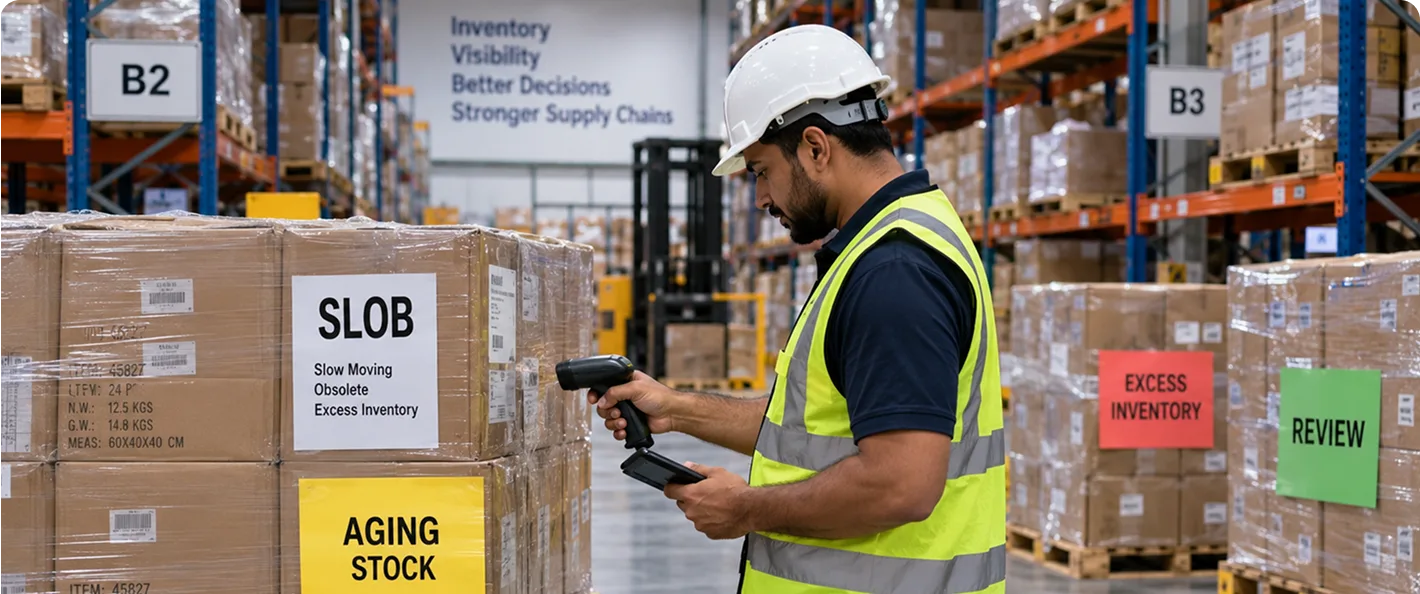
Identify slow-moving, excess, and obsolete inventory using defined thresholds, ageing criteria, movement patterns, and performance indicators to establish clear inventory risk categories.

Key Capabilities:

  • SLOB Categorization & Identification
  • Inventory Ageing & Movement Analysis
  • Threshold Definition & Risk Classification
Inventory Analysis

Inventory Analysis

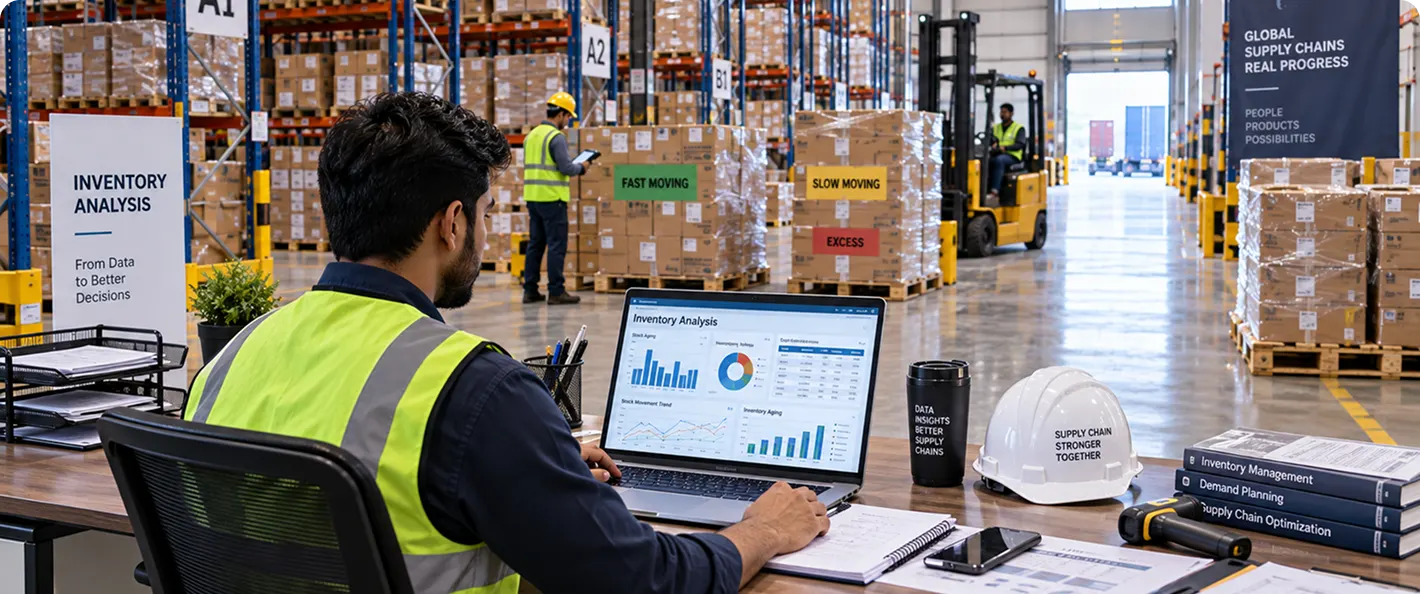
Evaluate inventory quantities, values, ageing, movement, demand, and financial impact to understand underperforming stock and prioritize appropriate recovery and optimization actions.

Key Capabilities:

  • Inventory Valuation & Analysis
  • Ageing, Movement & Demand Assessment
  • Financial Impact & Performance Evaluation
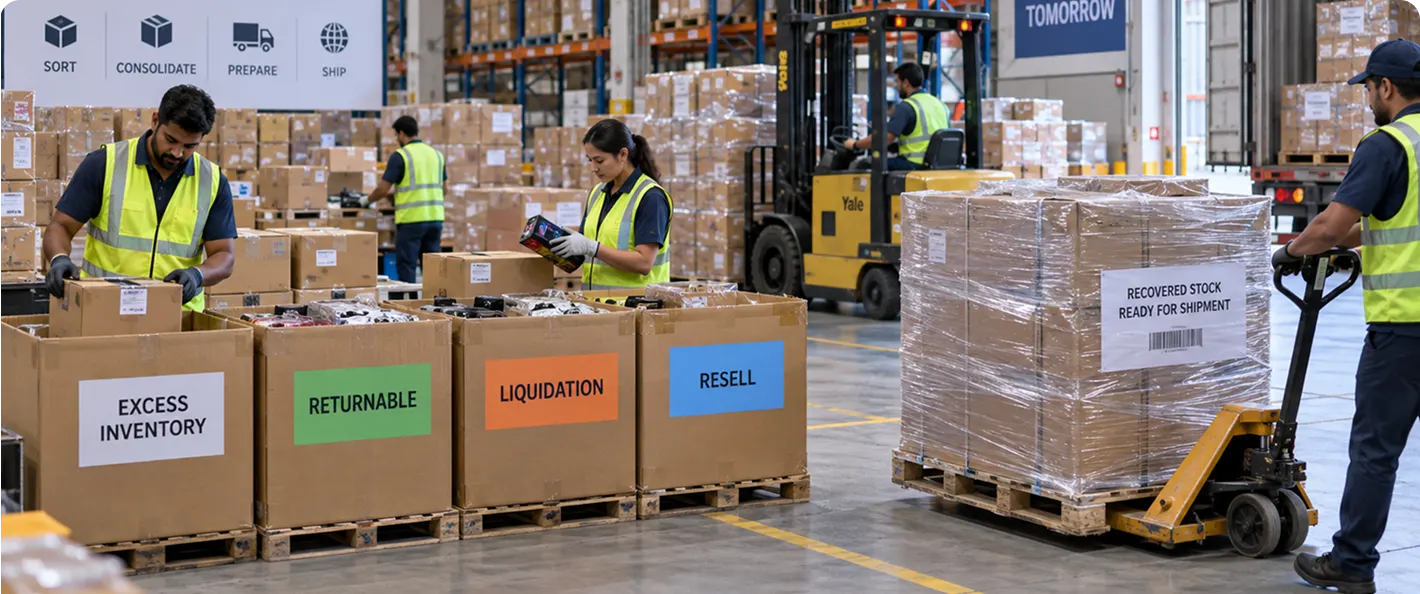
Excess Inventory Recovery & Liquidation

Excess Inventory Recovery & Liquidation

Develop recovery and liquidation strategies based on inventory characteristics, recovery potential, market opportunities, and business objectives to maximise the realisation of excess stock.

Key Capabilities:

  • Recovery & Liquidation Strategy
  • Buyer & Channel Identification
  • Excess Stock Disposition & Execution Support
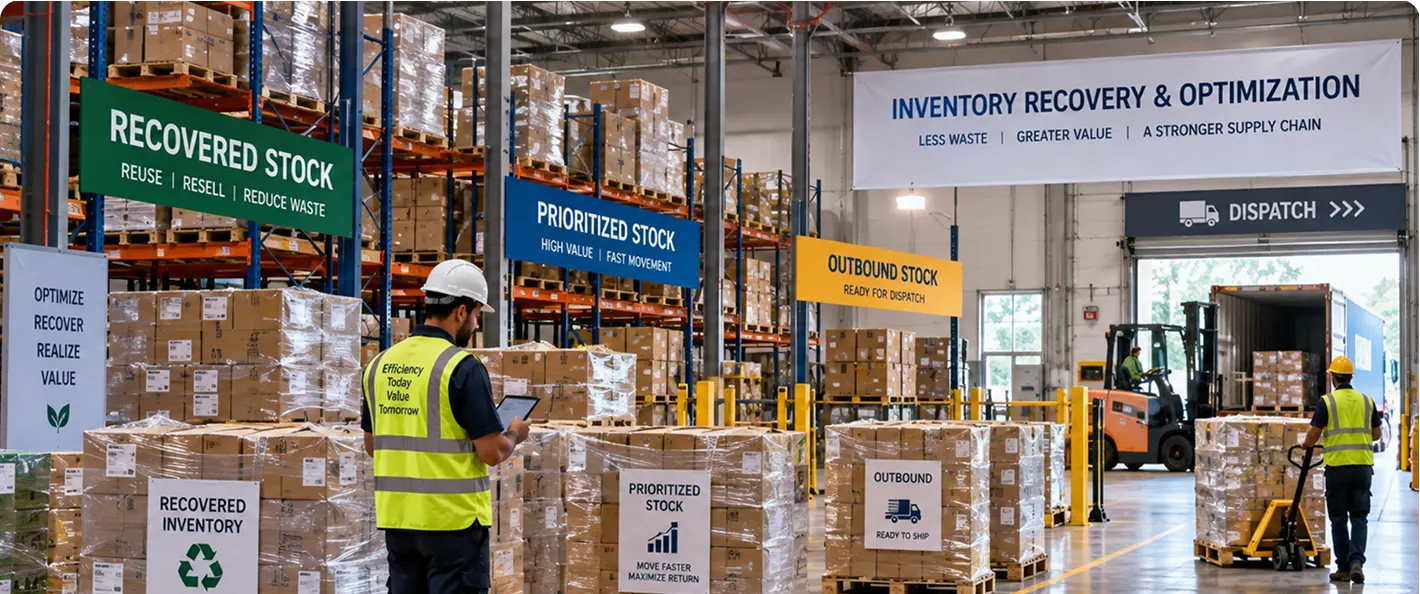
Recovery & Optimization

Recovery & Optimization

Use inventory performance insights to improve realization, strengthen inventory controls, and reduce future SLOB accumulation through structured optimization and continuous monitoring.

Key Capabilities:

  • Recovery Value Assessment
  • Disposition Optimization
  • Inventory Control & Performance Monitoring

Why Partner With Us for SLOBEx?

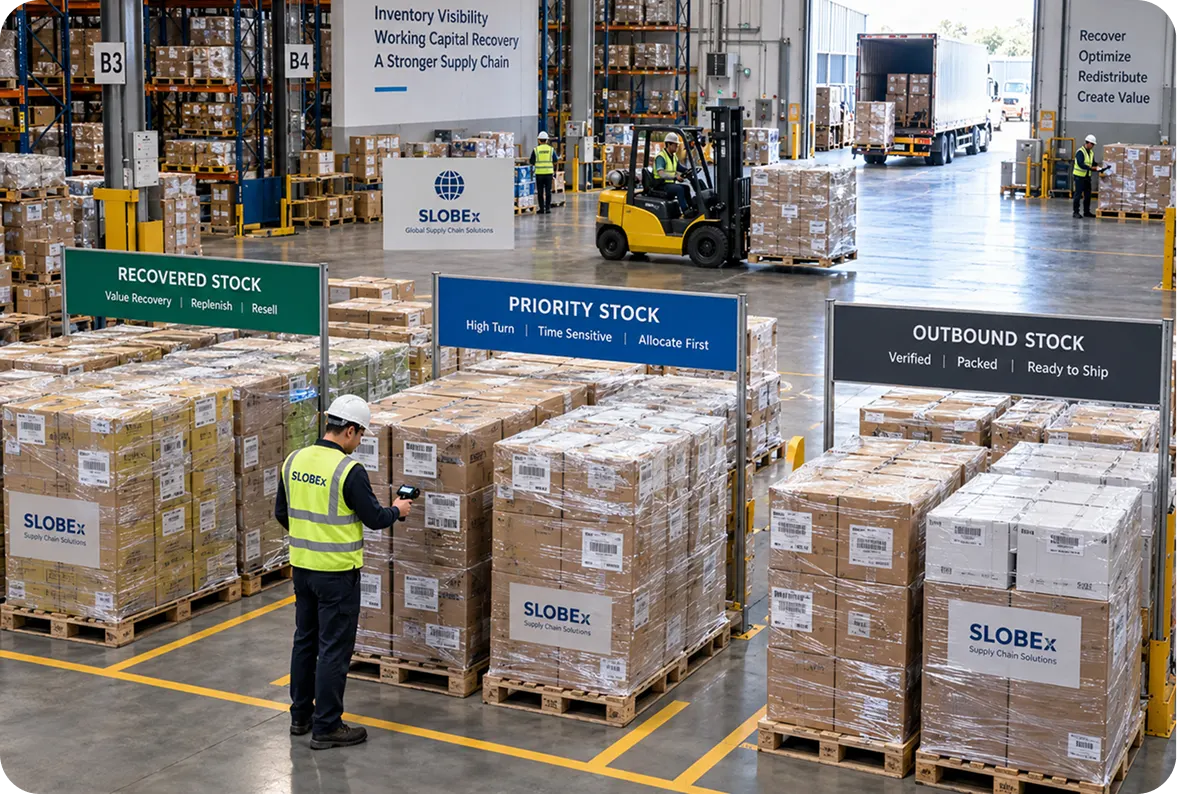
We help businesses gain control over underperforming inventory, recover working capital, improve inventory decisions, and build stronger practices to reduce future SLOB accumulation.

Why Partner

Improved Inventory Visibility

Clearer insights into SLOB inventory through structured identification, analysis, and monitoring.

Working Capital Recovery

Release capital tied up in underperforming inventory through targeted recovery and disposition.

Structured Inventory Recovery

Evaluate recovery channels and manage disposition through a coordinated, commercially focused process.

Continuous Inventory Optimization

Use insights to strengthen controls, improve planning, and reduce recurrence of excess and obsolete stock.

Frequently Asked Questions

Find answers to common questions about inventory recovery and optimization.

Slow-moving, excess, ageing, and obsolete inventory based on defined thresholds, movement patterns, value, and business requirements.

It provides visibility into stock age, movement, value, and financial impact to determine which inventory requires action.

We evaluate inventory characteristics and recovery potential to develop structured strategies, then support coordinated execution.

Yes. Recovering underperforming inventory can help release capital tied up in excess and obsolete stock while reducing associated holding costs.

Regular analysis, threshold management, performance monitoring, and stronger inventory controls help identify SLOB risks earlier.

Container

Ready to Unlock Value From Excess Inventory?

Turn slow-moving, obsolete, and excess inventory into recovery opportunities through structured identification, analysis, recovery, and optimization.

Forklift